
Ring, Ring, Ring! Answer the Call and Buy a Vintage Phone Today

Smartphones may be incredibly convenient and undeniably useful, but they’ll never be as aesthetically pleasing as the vintage and antique phones from decades past! It might not be practical to fully switch over from cellular to landline, but that doesn’t mean that collectible phones aren’t worth a look—especially when you learn how valuable some of the designs can be.
Before you take to your local vendor mall in search of the perfect vintage phone for your desk, do your due diligence. This guide has everything you need to learn how to identify collectible phone models and more.
The History of Vintage Phones
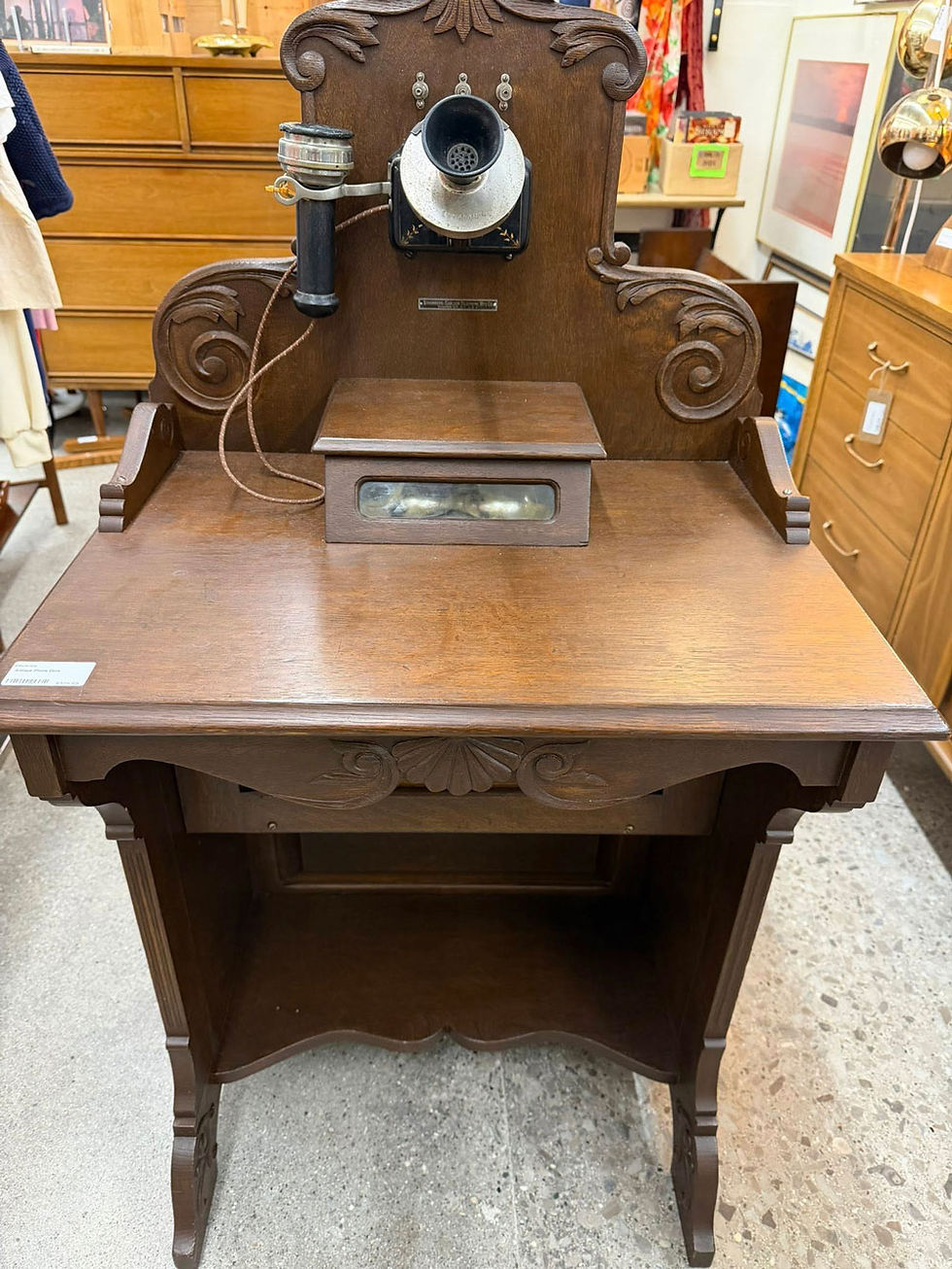
There’s no doubt about it: the phone is one of the most momentous inventions of all time. Patented by Alexander Graham Bell in 1876, the phone gave humankind the ability to talk directly with one another across distances, all but replacing previous methods of communication, such as the telegraph. It may seem simple, but eliminating the need for written letters that require physical travel for delivery revolutionized how we, as people, could interact.
In the following years, the original antique phone design got more compact in order to fit inside people’s homes. By the 1930s, just about every affluent family had their own collectible phone, resulting in networks spreading even further so calls could be made across multiple cities.
But even during those times, most callers continued to rely on local pay phones to make their calls. That is, until the 1950s and ‘60s, when manufacturers began creating cheaper and more accessible systems out of more readily available materials. It only took a few more decades for vintage phones to be commonplace in every house in the Western world—and we’ve never looked back.
What Would It Look Like to Switch Back to Corded Phones?
There are plenty of reasons people collect antique phones, but one of the most surprising is spurred by the current and trendy push towards returning to an analog lifestyle. For some people, this means listening to music on a retro record player or putting time into stress-relieving hobbies like gardening or handmade pottery. If living a bit slower, or at least more disconnected from the hustle and bustle of modern-day life, sounds appealing, you might want to consider placing your cell phone somewhere hard to reach and installing a collectible phone as a landline somewhere in your home.

Believe it or not, taking away the device that gives us instant access to information and the connections we’re used to has immense mental health benefits. With vintage phones, you need to actually call someone, rather than opening up your phone, forgetting the reason why, and coming to 45 minutes later from a doomscrolling episode. We’ve all been there!
But this practice does more than reduce your screentime—it forces you to talk to the people you love in your life voice-to-voice, rather than hiding behind a blue light screen. After a few calls on your collectible phone, you’ll quickly realize that the occasional Instagram comment wasn’t giving you the fulfillment you were seeking. Between increased mindfulness and the room to form deeper connections, there doesn’t seem to be any negatives to grabbing an antique phone of your own.
Where is the Best Place to Shop for Vintage and Antique Phones?
While there are certainly plenty of online options for finding collectible phones, nothing beats stumbling across your dream antique phone in the wild! But where should you search? Local charity shops and flea markets may have a few in stock, but why would you waste your day driving from store to store when you could browse a larger-than-life antique mall?
With hundreds of booths, showcases, and shelves, each filled to the brim with collectible and valuable items across all kinds of niches, the vendor mall is your best bet for discovering the perfect vintage phone for you and your style. If you’re looking for a specific model, consider calling ahead to ask the employees if there’s one in stock. Otherwise, grab your purse, set aside a few hours for exploration, and take to the aisles at your own pace!
America’s Antique Mall is Located In:
A Look into the Most Collectible Phone Styles Throughout History
Honestly, there may be too many manufacturers, brands, and specific models of vintage phones to put all in one list. That’s why most antique phone aficionados categorize collectible phones into five distinct designs. Before you start shopping, we recommend familiarizing yourself with each one to get a better understanding of the exact type you want.
Top 5 Types of Vintage and Antique Phones:
Wall phones
Candlestick phones
Slot pay rotary phones
Desk rotary phones
Push-button phones
1. Antique Wall Phones
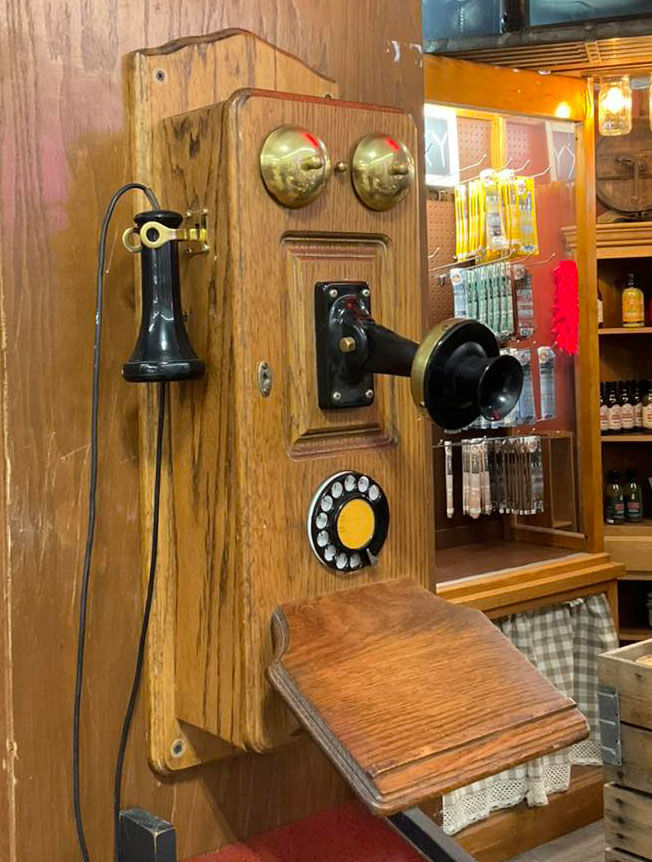
Popular in the late 19th and early 20th centuries, antique wall phones are aptly named. Designed to hang on the wall and relying on a hand-cranked magneto to generate enough ring voltage, these antique phones are made up of an external mouthpiece, a separate earpiece, and a solid wooden cabinet, often made from oak or walnut, that hides wires. They can also be referred to as box, coffin, or camera phones.
This form of collectible phone can feature extra ornamentation or offer a completely simple aesthetic—it varies from manufacturer to manufacturer. When you’re shopping in the collectible phone section, there are a few variations you might come across.
3 Popular Styles of Antique Wall Phones:
Plain front wall phone: with a flat, simple front piece, these minimalist antique phones were created by American Electric, Kellogg, Western Electric, and Stromberg-Carlson during the 1930s as other companies began to shift to more contemporary styles.
Picture frame front wall phone: with ornate detailing in the wood around the mouthpiece, these collectible phones were made by Western Electric, Couth, and Century between the early 1900s and 1930s, and were powered by a magneto, while still requiring batteries to function
Fiddleback wall phone: with a back shape resembling a curvy fiddle or violin, these antique phones were popular from the mid-1890s to early 1900s, crafted by Western Electric, Century, and Couch & Seely, and featured hand-cranked magneto generators, dry-cell battery compartments, and two external ringing bells.
2. Antique Candlestick Phones

Tall, narrow, and iconic in the vintage phone collector’s community, the candlestick telephone is easily recognizable by its slender vertical stand (hence, candlestick). These desktop designs were created to replace wall-mounted phones, allowing the caller to sit during their conversation. With a mouthpiece at the very top of the “candlestick” and a separate receiver that was lifted and held to the ear, this type of antique phone was all the rage throughout the late 1890s to the 1940s, as seen on shows like “I Love Lucy.”
While the earliest models connected via operators, the later editions that are more commonly found in an Algonquin antique mall added rotary dials to the base. If you find one that still has its original cords, wires, and receivers, it’s much more valuable.
3. Slot Pay Rotary Phones
Before most of the world had its own mobile devices, we had to rely on the public slot pay phones that were frequently placed in pharmacies, hotel lobbies, and other public spaces between the 1940s and 1970s. The top generally had three slots (one for nickels, one for dimes, and one for quarters). When money was placed in the slots, the line would activate and connect you to either a local phone number or operator, depending on what you dialed on the rotary.
Just because slot pay rotary phones were not household staples doesn’t make them any less collectible! Representing a bygone era of communication, even lifting the receiver to make a fake call can be fun for collectors of all ages. If you want a statement piece in your home, this is the vintage phone for you.
4. Desk Rotary Phones

When most people think about vintage phones, it’s the desktop rotary model that comes to mind—and with good reason! Though the exact shape and style varied depending on the manufacturer, all desk rotary phones worked in a similar way. Just lift the handset, listen for the dial tone, and place your finger in the hole for the first digit of the phone number. Rotate the dial clockwise until you feel a metal stop, release it, and repeat the process for each digit.
Whether you grew up using your grandparents’ rotary phone or remember seeing them in your favorite movies, the rotary phone, popular from the 1920s to the 1970s, is equally nostalgic and valuable. If you’re looking to make a profit from partaking in this hobby, make sure to keep your eyes peeled for the iconic Western Electric 500 model. Made from a heavy plastic with a rounded square base, classic rotary dial, and heavy-duty handset that sits on top, this collectible phone can be worth a pretty penny.
Valuable Colors for Western Electric 500 Rotary Phones:
Mediterranean Blue
Oxford Grey
Mahogany Brown
Rose Beige
Brown
5. Push Button Phones

Introduced in the 1960s, the push button phone replaced the traditional rotary dial with 10 buttons (though 12-button layouts with a * and # symbol were later popularized), eliminating the time-consuming process of “dialing” a phone number all together. When a button was pressed, it would produce a unique combination of one high and one low frequency that corresponded to a specific number.
Many collectible phone lovers claim that the push-button model was the start of the end for landlines—but that doesn’t make them any less fun to search for! Typically made in the exact same shape as its predecessor, the desk rotary phone, these models are easy to find at thrift stores and vendor malls around the country.
What is the Princess Phone?
Often aimed towards women, the princess phone was created in 1959 and advertised as the perfect choice for your bedroom. Made in pastel pink, white, and turquoise, this compact, lightweight design was a third of the size of a standard desk phone and featured an iconic luminous dial that doubled as a night light. When you hear the original slogan, “it’s little…it’s lovely… it's light,” it’s easy to see why this collectible phone model was such a hit!
What Should You Keep in Mind When Shopping for a Vintage Phone?

It can feel tempting to buy the first antique phone you come across, but we urge you to think again! If you’re interested in grabbing a collectible phone of your own, there are a few things you’ll need to keep in mind before tapping your card.
5 Factors to Consider When Buying a Collectible Phone:
Aesthetic: Does the vintage phone suit your existing interior design style? If not, are you willing to redecorate that space to make your vintage find fit in?
Condition: Does the antique phone have any noticeable dings or scratches on the surface? Are all cords intact?
Rarity: Is the vintage phone considered rare by collectors? If so, does it come with the proper authentication papers to prove its worth?
Budget: Is the antique phone within your budget for that shopping trip? Most cost between $100 and $500 dollars, so keep that in mind as you consult your finances.
Function: Does the vintage phone work? If it doesn’t work, are you okay with it being a statement piece of décor?
Can You Repair a Damaged Antique Phone?
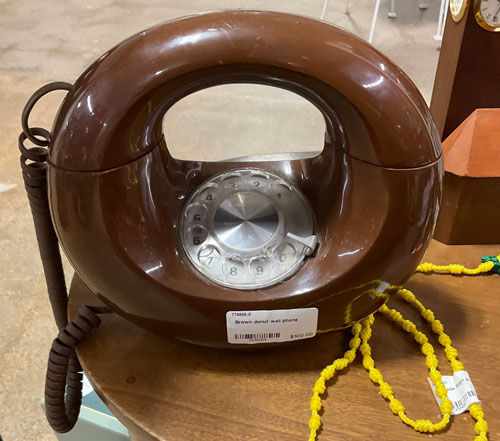
The majority of antique phones haven’t been used since their original owners, so it makes perfect sense that many of them are no longer in working condition. But that doesn’t mean they have to stay that way! It doesn’t matter if they are missing parts, have a broken exterior, or require internal rewiring—there are plenty of specialized services and professional restoration companies capable of bringing your new antique phone back to life.
The next time you’re attending an event or wandering the aisles of our antique mall, take a second to scour the booths for these beautiful collectible phones. There’s no telling what fascinating antique phones you’ll come across at America’s Antique Mall—but there is one way to find out! Stop by today.


