
How Vintage Christmas Ornaments Bring Joy to the World—and More!

When holiday music starts blaring on every radio station and the air begins to chill, it’s time to bring out your family’s favorite Christmas decorations. Of course, no tree is complete without the ornaments. This year, consider leaning into a retro look by sprinkling in a few vintage ornaments for a bit of timeless magic.
What’s the Difference Between Vintage Ornaments and Antique Ornaments?
When you’re first starting out in your journey of buying older Christmas ornaments, it’s important to know the lingo used by the antique mall vendors. If a bauble is labeled as a vintage ornament, it was made between 20 and 99 years ago. Anything crafted before the 1920s, like the Kugel glass ornaments, is categorized as antique.
Why Do People Collect Vintage Ornaments?

Let’s face it: though it’s hard to put your finger on why, the Christmases from our youth felt far more magical than holidays of today. Some chalk it up to the muted Christmas lights, others to the fact that it felt like simpler times. If you yearn for the memories spent gathered around the tree at your grandparents’ house, adding a few antique ornaments to your own might give you that feeling you’re looking for.
When it comes to modern-day ornaments, they truly just don’t make them like they used to. Whether it’s the hand-blown figural shapes or carefully constructed mercury glass icicles, antique baubles were made almost exclusively by highly trained artisans. The imperfections found on each bauble aren’t an accident caused by mass-produced machines—it’s a sign that someone poured their time and effort into the antique ornament’s creation.
Of course, other people who collect Christmas ornaments are in it for the money. While not every Shiny Brite ornament you come across at a flea market will fetch hundreds at an auction, there are a few brands, especially those made in long-gone eras, that only grow in value. If you’re interested in them as an investment opportunity, focus your efforts on collecting the rarer designs.
How Can You Tell if a Vintage Ornament is Valuable?
The next time you stumble upon an antique ornament at your go-to vendor mall in Ohio or inherit a set of matching mid-century ornaments from your relative, it’s worth taking the time to assess each one for its potential value—even if you don’t intend to resell it in the future. Luckily, with so many sellers and collectors passionate about their craft, valuing a vintage ornament is easier than you’d think. All you have to do is know what to look for.

Factors That Affect Vintage Ornament Value:
Rarity: If a vintage ornament has a rarely found production era, was only made for a short time, or comes from a period where there are few baubles still around, then collectors are typically willing to spend extra in order to add it to their assortment.
Condition: Just because an antique ornament is old doesn’t mean it should have too much wear and tear. A mint-condition ornament will always fetch a higher price, but even the ones with flaking paint or broken parts can still find their way into a collection, so don’t discount the slightly damaged designs you come across!
Brand: Some people collect antique ornaments from specific brands to give their tree a more cohesive look. Popular companies include Hallmark Keepsakes, Shiny Brite, and Coby Glass.
Techniques: If certain techniques, such as free-blown glass or hand-applied silvering, are used in the formation of an antique ornament, people will pay more to own it, as those methods are rarely used commercially today.
Materials: When Christmas ornaments feature mercury glass, spun cotton, and Dresden paper, materials that are no longer commonplace in the holiday décor market, they’re almost always listed at higher prices at a Kentucky antique store.
A Look at Different Vintage Ornament Styles Throughout Time

It might come as a shocker, but not all antique ornaments are alike. In fact, when you really get into it, you’ll notice just how different each era of Christmas décor actually looks. Before you set foot in a vintage shop, it’s a good idea to get a feel for the aesthetics of ornaments in different time periods.
Victorian Era Christmas Ornaments
If you’re searching for that classic Yuletide feel in your home, it’s Victorian-era Christmas ornaments you want. In these years, while the lower classes were stringing up edible garlands and crafting bows and angels out of fabric and ribbons, high society was becoming obsessed with two types of German ornaments: the thick-walled, silver interior Kugel glass ornaments and embossed, 3D foil-coated paper designs called Dresden ornaments. Using a mixture of both in your own home will help you transform your space into something straight out of A Christmas Carol.
Art Deco Christmas Ornaments
Known for sophisticated and sharp designs, Art Deco Christmas ornaments are the definition of elegant. With bold geometric shapes, sleek silhouettes, and sparkling metallic finishes, the molded figural glass baubles popular in this time period match the look of the architecture and day-to-day décor we still know and love today. If you come across antique ornaments with beaded strands, sunburst motifs, symmetrical shapes, and an opulent look, chances are, you’ve found an authentic design.
Wartime Christmas Ornaments
During World War II, the government began rationing the metals and chemicals used in vintage ornaments for war efforts, giving the baubles from this era a completely unique look. Companies like Shiny Brite were able to ramp up production of their glass ornaments, sometimes adding paint to the outside for a splash of color or a piece of tinsel inside to enhance the sparkle rather than the usual silvered coating. Even the caps of Shiny Brite ornaments were switched from metal to paper and cardboard—another sign of the hardships of the time.
‘70s and ‘80s Christmas Ornaments

As far as mid-century ornaments, hand-crafted baubles were certainly the trend—but it wasn’t the only way to decorate a tree. Launched in 1973, Hallmark began releasing its signature Keepsake Ornaments. These highly collectible holiday designs can be crafted from porcelain, metal, or plastic and are all stamped with the specific year of release so that each one captures and commemorates the year you got it. If you find one still within its iconic red box, the price skyrockets!
Santa Land ornaments were also widely sought after in the ‘70s, and while many original vintage ornament sets were made in Europe, they were distributed across the United States. These mouth-blown glass baubles are decorated with glitter and fabric, and even though there was a more recent revival of the brand, nothing beats the real deal.
‘90s Christmas Ornaments
While it may not seem like it, baubles from the ‘90s do classify as vintage ornaments! In this era, the most popular collectibles were no longer shiny perfect spheres or dangling icicle shapes.
Instead, families everywhere were less interested in brand name and more into decorating their trees with pop culture figures. Suddenly, Disney figures, band and TV show references, and electric light-up designs were all the rage.
5 Tips for Collecting Vintage and Antique Ornaments
Learn to spot fake vintage ornaments
Examine Christmas ornament caps
Pick a theme for your collection
Shop throughout the year
Mix and match modern and antique styles
Tip 1: Learn How to Spot a Fake Vintage Ornament

The unfortunate reality of collecting anything antique, whether it’s a bauble, heirloom jewelry, or pocket watches, is that there will always be a few companies out there who produce rip-offs of the real deal. The last thing you want is to be duped with these fake replicas. To avoid it, look for difficult-to-copy patina on metal details, uneven edges on mouth-blown glass ornaments, a durable weight, and a reflective interior on each bauble you consider buying at the Melbourne antique mall.
Tip 2: Examine Christmas Ornament Caps
The type of cap used on a Christmas ornament is normally a dead giveaway for when the design was made. While they could have been switched out by a previous owner, many antique ornaments feature a simple metal cap, often with a bit of rust or a tarnished surface. If you take a closer look at the vintage ornament’s cap, you might find a stamp of a company name or country of origin, bringing you one step closer to correctly dating and valuing the bauble.
Tip 3: Pick a Theme for Your Christmas Ornament Collection
While it can be tempting to buy every single antique ornament you come across, showing some restraint will help you in the long run. To make your collection feel more cohesive, experienced pros recommend finding designs that revolve around one unifying theme.
This could be as simple as only collecting antique ornaments that follow a certain motif or color palette, or as exclusive as only buying from one specific brand—the choice is up to you. But be careful: once you start a themed collection, everyone in your life will load you up on baubles that suit it for the rest of your life!
Popular Ornament Collection Motifs:
Stars
Snowmen
Santa Claus
Snowflakes
Candy
Woodland animals
Bells
Foods
Tip 4: Shop For Christmas Ornaments Throughout the Year
There’s no reason to wait until it’s time to deck the halls to check out your local Highland antique mall for Christmas décor! The best vendors always have plenty of vintage ornaments on display, regardless of the month. While the festive items set out in booths and showcases certainly increase as winter approaches, shopping for antique ornaments throughout the year increases your chances of finding an extra-special design.
Tip 5: Mix and Match Modern and Antique Ornaments
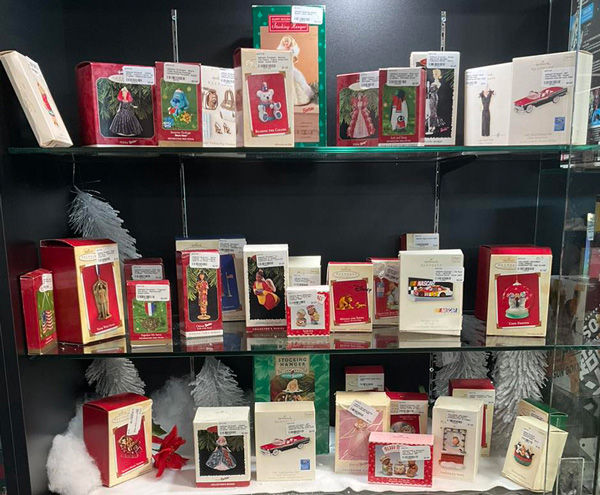
Just because you have a new affinity for vintage ornaments doesn’t mean you have to leave your contemporary Christmas ornaments to collect dust in storage. Instead, lean into the whimsy and mix and match both on the same tree.
Where’s the Best Place to Buy Antique Christmas Ornaments?
While rifling around in your grandmother’s attic and scrolling endlessly on eBay.com are fun ways to pass the time, your best bet for finding beautiful and valuable antique Christmas ornaments is shopping in person at your nearest antique mall. There, all in one larger-than-life location, hundreds of vendors show off their curated collections for you to peruse.
The best part of browsing a Louisville antique mall? No two visits are ever alike. With each vendor constantly working to rotate their merchandise, you can never be sure an antique ornament will still be available for purchase the next time you stop by. If you like a bauble, make sure you snatch it up before someone else gets to it!
Are There Other Ways to Display Vintage Ornaments Around the House?
If you’ve filled up one tree with vintage Christmas ornaments and have no room for a second one in your home, don’t fret! There are plenty of ways to still showcase your precious antique ornaments around your house to make the season feel a little more merry and bright. It just takes a little creativity.
3 Alternative Ways to Display a Christmas Ornament Collection:
Hook the baubles onto a fake garland and wrap it around your staircase railing or hang it from your mantle or doorways
Fill a large glass bowl with the most delicate designs and set out as a centerpiece for your dining table
Hang your favorites on sturdy ornament stands and spruce up your bookshelf or mantle (this is a great way to display favorite designs all year long)
What’s the Safest Way to Store Antique Ornaments?

Since most antique ornaments are more fragile than modern-day baubles, it’s important to invest in proper storage options right out of the gate. Experts recommend wrapping each one in its own piece of acid-free tissue paper before placing it into its own divided section of a sturdy, multi-compartment storage box. As long as you keep that container in a climate-controlled space, your collection should last a lifetime.
Don’t just sit there! Head to America’s Antique Mall today to start your search for antique ornaments and beautify your Christmas tree with these vintage finds.
