
The Timeless Beauty and Collectability of Porcelain Dolls

If you thought collecting dolls was just for kids, think again! There are plenty of adults who spend their hard-earned money on dolls of all shapes, sizes, and styles. Some are motivated by the powerful feeling of nostalgia, accruing countless Barbie and Madame Alexander dolls reminiscent of their youth. Others, understanding the immense value certain toys can hold, put all their energy into hunting down the rarest designs in the market.
If you’ve been looking for a hobby, don’t discount just how fun finding collectible dolls can be. Start your collection today.
What Are Porcelain Dolls?
Though some form of doll has always existed, whether they were made out of plastic, corn stalks and string, or carved pieces of wood, porcelain dolls continue to be one of the most valuable, sought-after designs out there. Made up of a soft body, luxurious outfits, and parts (typically the head and limbs) made from fired clay, porcelain dolls are considered in the collecting world as the epitome of elegance.
What are the Different Types of Porcelain Dolls?

While they’re all beautiful, not all porcelain dolls are the same. The main difference lies in where it was made and what materials were used. If you ask a collectible doll expert, they’ll tell you that there are two main kinds of porcelain dolls: China and bisque.
China porcelain dolls, produced in the mid-1800s to mid-1900s, are easily identified by their shiny, glazed finish, painted facial features, and molded or painted hair. Bisque dolls, made in France and Germany in the late 1860s, took a more realistic approach, using glass eyes, human hair or mohair for the wigs, and leaving the porcelain unglazed in an effort to make it look more like skin. Differences aside, you can rest assured that both types of collectible dolls have their fan base.
When Were Porcelain Dolls Most Popular?
You might have grown up seeing glass-like collectible dolls on display in your grandparents’ home, but porcelain dolls hit their pique in popularity far before that. The earliest designs were created in Europe as miniature mannequins made to model the latest fashions for the upper class at the time. It wasn’t until about 100 years later that they would be marketed towards children.
How Are Porcelain Dolls Made?
Back in the day, all porcelain doll collectibles were produced the exact same way. An artisan would pour slip (equal parts clay and water) into a plaster mold, letting it harden into a hollow shell before firing it in a kiln at a high temperature. Each piece is then sanded down, in an effort to reach a smooth texture, painted, and fired a few more times to achieve the desired look.
How to Start Your Own Collection of Porcelain Dolls
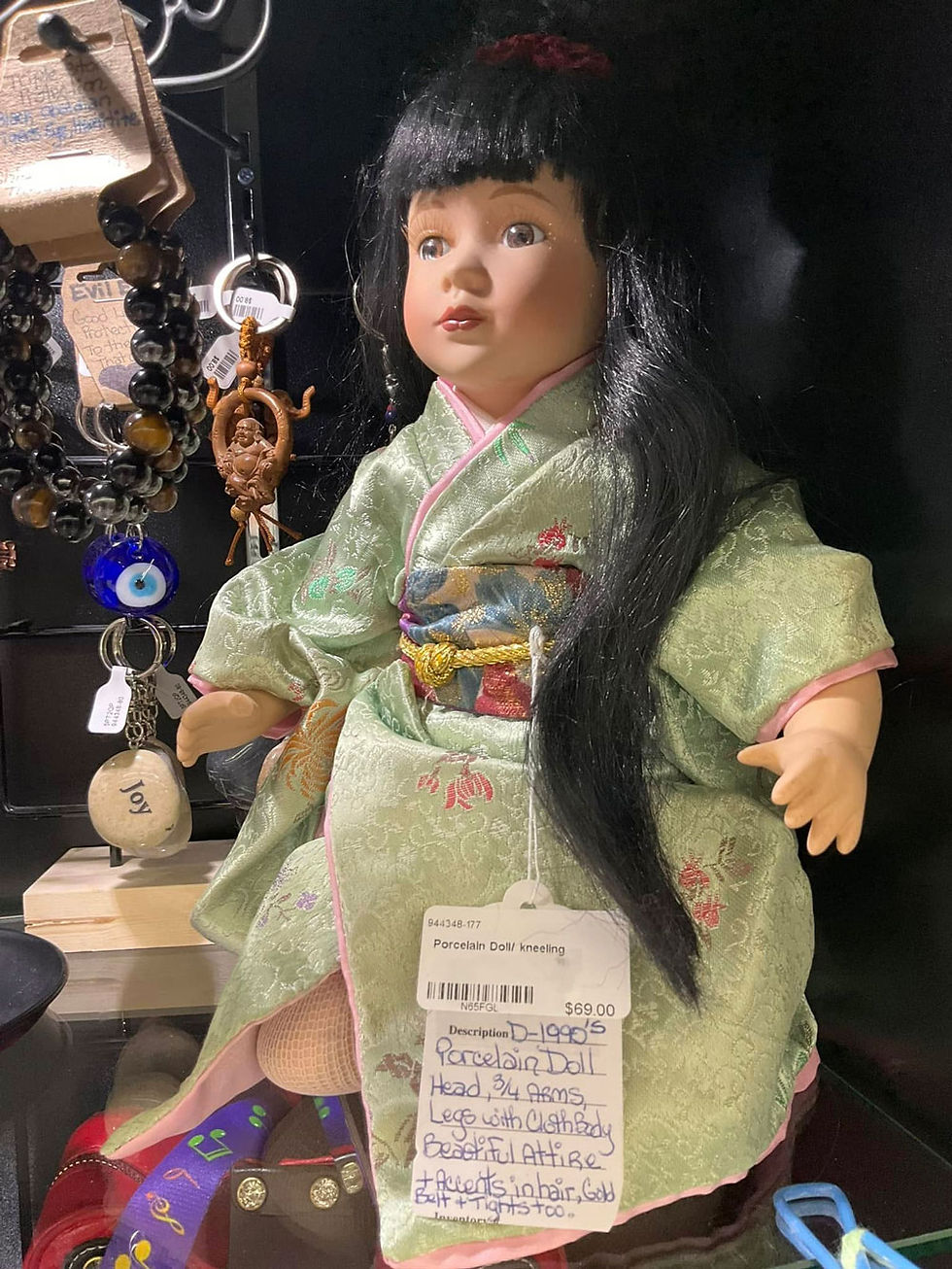
If you’re feeling inspired to nurture your inner child and partake in a worldwide pastime, we’re here to tell you that it’s never too late to start collecting dolls! Follow these simple steps to find the collectible dolls of your dreams.
5 Steps to Starting Your Porcelain Doll Collection:
Step 1: Value
Step 2: Niche
Step 3: Authentication
Step 4: Shopping
Step 5: Storing
Step 1: Understand What Makes a Collectible Doll Valuable
The first step to any kind of collection, whether it’s cast iron doorstops or vintage furniture from Algonquin, is understanding exactly what determines a piece’s value. The same remains true for collectible dolls!
Most of the time, if you’re shopping online or at your favorite antique mall, the seller will have done the work behind the scenes to accurately price a porcelain doll. But there’s always a chance of finding one that’s listed way below its actual value. There’s nothing more thrilling than being able to spot it!
Some designs are worth a couple of bucks, while others go for several thousand. The final price tag is determined by a combination of a few different design elements:
Factors That Affect a Collectible Doll’s Value:
Condition: Chips, smudges, cracks, and worn-down surfaces can all lower the value of a collectible—the higher the condition, the higher the price.
Craftsmanship: Signs of quality craftsmanship, like the intricacy of the painted details or sturdiness of the stitches, could mean you’ve struck gold.
Age: Antique collectible dolls must be over 100 years old, while vintage dolls can have been made anywhere between 20 and 99 years ago. The porcelain designs made before 1900 continue to be sold at the highest prices.
Rarity: Since the majority of porcelain collectible dolls were made from molds, finding a one-of-a-kind doll is extremely rare—if scarcity is what you’re after, search for limited edition designs or early models at the Melbourne vendor mall.
Details: Some collectors are focused more on the aesthetics than design features and base their purchases mainly on the facial details, outfits, and accessories.
Step 2: Determine What Kind of Porcelain Doll You Want to Collect

While it can feel tempting to buy every gorgeous collectible doll you come across, we encourage you to show restraint! Spending your money more intentionally will help you curate a collection that matches your unique interests and goals.
Do you want to focus on finding standout character dolls? Are you interested in hunting down the whimsical bébé dolls made to look like the children of the time? Determining exactly what kind of doll you’re searching for is key.
Step 3: Learn How to Authenticate a Doll
Before your first visit to the local Arizona antique mall, do a bit of research into proper authentication methods. In an ideal world, you’d be able to trust every vendor you come across—but that’s not always the case.
When looking at collectible dolls, try to find the maker’s mark. This informative label is likely located on the back of the head, the neck, or the soft cloth body.
Step 4: Start Your Search
You’re finally ready to start shopping! While it’s easy to sit at home and browse online auction sites for different porcelain dolls, it’s impossible to beat the feeling of stumbling across one in the real world. Swing by your nearest Louisville antique mall and spend the day searching for collectible dolls.
Step 5: Research Proper Storage Methods for Dolls
The one downside to porcelain dolls is that, by nature, they’re quite fragile. In order to preserve your finds for years to come, you’ll need to study up on the best ways to store them.
Experts recommend keeping them in a temperature-controlled area in your home, away from spaces that are prone to water damage, humidity, or direct sunlight. If you aren’t going to display them or play with them in a vintage dollhouse, grab a few archival-quality storage boxes.
With their rosy cheeks, adorable smiles, and fashionable fits, there’s nothing not to love about porcelain dolls! Start collecting today at America’s Antique Mall.


