
A Closer Look at the Design Details That Bring Victorian Furniture Styles to Life

When you think of the Victorian era, what comes to mind? Is it the legacy of the regal ruler of England, Queen Victoria? Perhaps it’s your favorite Charles Dickens novel from high school! Maybe, just maybe, it’s the opulent, intricate antique furniture styles that remain oh-so popular. If that’s the case, learn a bit about what makes Victorian furniture pieces stand out.
Let’s Start by Defining the Victorian Era
The Victorian Era took place during the reign of Queen Victoria in England, spanning from roughly 1837 to her death in 1901. Those years were a period of great power and wealth for Britain, as it worked tirelessly to expand its empire around the globe. As the educated middle class grew and the Industrial Revolution allowed furniture production to increase, extravagant and over-the-top Victorian furniture styles became more and more popular within the UK (and eventually, beyond).
Are Victorian Furniture Styles Trendy Again?

In the past few decades, we’ve seen a move towards clean lines and minimalism—but that doesn’t mean Victorian furniture styles have gotten any less popular! If you’re searching for statement-making antique furniture, nothing adds character and charm to a modern home quite like Victorian designs. In fact, plenty of contemporary companies work hard to keep up with demand, producing modern Victorian pieces each year.
What Inspired Victorian Furniture Styles?
When you take a closer look at Victorian furniture, it’s easy to see which historical styles influenced the designs of the time. The earliest antique furniture drew heavily from the Gothic, Renaissance, Rococo, and Neoclassical periods to create a distinctly unique look. These reinterpreted pieces took the best elements of each aesthetic to produce one cohesive and impressive style still popular today.

The Major Design Elements Found in Victorian Furniture
Victorian furniture has a world-renowned reputation for solid construction, romantic appeal, and enduring style. If you come across unlabeled antique furniture in an antique mall in your area, there are a few design elements that could help you date the piece as Victorian, including:
1. Newly Invented Coiled Springs
While coiled springs are now commonplace in furniture, the concept was once brand-new. Coiled springs were first patented for seating designs in the 1820s, but it was not until the Victorian era that their application became the norm.
These springs were placed underneath the cushions of a sofa or chair, allowing for a deeper and more comfortable sitting. This move directly affected the height of furniture legs and the use of more durable fabrics.
2. Covered Furniture Legs

In most cases, the date of antique furniture can be estimated by looking at the legs, and that’s especially the case for Victorian furniture styles! In an effort to protect furniture from scratches, damage, and dust, the legs were often wrapped in fabric covers. In most cases, the fabric chosen was more than utilitarian—it was part of the overall aesthetic.
When it comes to the legs themselves, Victorian furniture styles utilized a variety of shapes. They include:
Cabriole: s-shaped with an outward knee, inward ankle, and ball-and-claw feet
Fluted: straight with evenly spaced concave, rounded grooves
Reeded: straight with evenly spaced raised grooves
Barley twist: straight with a distinctive continuous single, double, or sometimes quadruple spiral design
Saber: curved leg that splays outward, resembling the blade of a sword
Trumpet: turned leg that flares outward and gets wider towards the base, like an upturned trumpet
3. Handcrafted and Traditional Joinery Techniques
Authentic antique furniture from the time (as well as some modern Victorian designs) features a hand-cut dovetail joint, which has since become a hallmark of high quality. The interlocking tails and pins of a dovetail joint are prized for their resistance to being pulled apart. If a design was crafted entirely by hand, it may have slightly uneven joinery.
During the Victorian period, machine-made joints, such as the Knapp joint, were introduced. If a piece features these, it was likely made later in the era. When you’re browsing your favorite Indiana vendor mall, take a break from looking at the vintage Christmas décor to search for these fine details.
4. Luxurious and Durable Fabrics

Essentially, every piece of authentic Victorian furniture, like chairs and sofas, from the period, is covered in some sort of fabric. Stiffer materials with rich textures were preferred to be able to withstand daily use, but when it came down to which fabric to use, pattern mattered most. At the time, the most popular antique furniture fabrics included:
Velvet
Silk
Wool
Coarse hair cloth
5. Hard Woods and Shellac Finishes
The vast majority of Victorian furniture was crafted from hardwoods, which are praised for their captivating hues and durability. Mahogany, walnut, and rosewood had a reputation for rich colors and the ability to be intricately carved with whatever popular motifs and patterns the artist had in mind. In some cases, oak was the preferred wood, as it had become a recognized symbol of the nation’s strength and cultural identity around the death of Queen Elizabeth I.
Almost every dining table, chair, and desk crafted at the time was coated in a fine shellac finish. This polish enhanced the wood’s grain and dried quickly, making it the preferred technique for both handmade and mass-produced pieces of antique furniture.
Learning how to spot high-quality wood can help you distinguish between real antique furniture and modern Victorian pieces. Though contemporary companies try their best, it’s hard to replicate the beautiful shine that authentic Victorian furniture styles boast.
6. Ornate Carvings and Intricate Inlays
No wooden piece of Victorian furniture was complete without an elaborate carving! Artists took their time to carve floral patterns, undulating lines, fleur-de-lis, animals, cherubs, fruits, and more in each antique furniture design, creating little works of art for each home.
These details were then elevated with inlays. The furniture designer would embed ivory, metal, or even ebony into the carved-out surface to add to the lavish look.
Search for these Staple Victorian Furniture Styles at Your Antique Mall
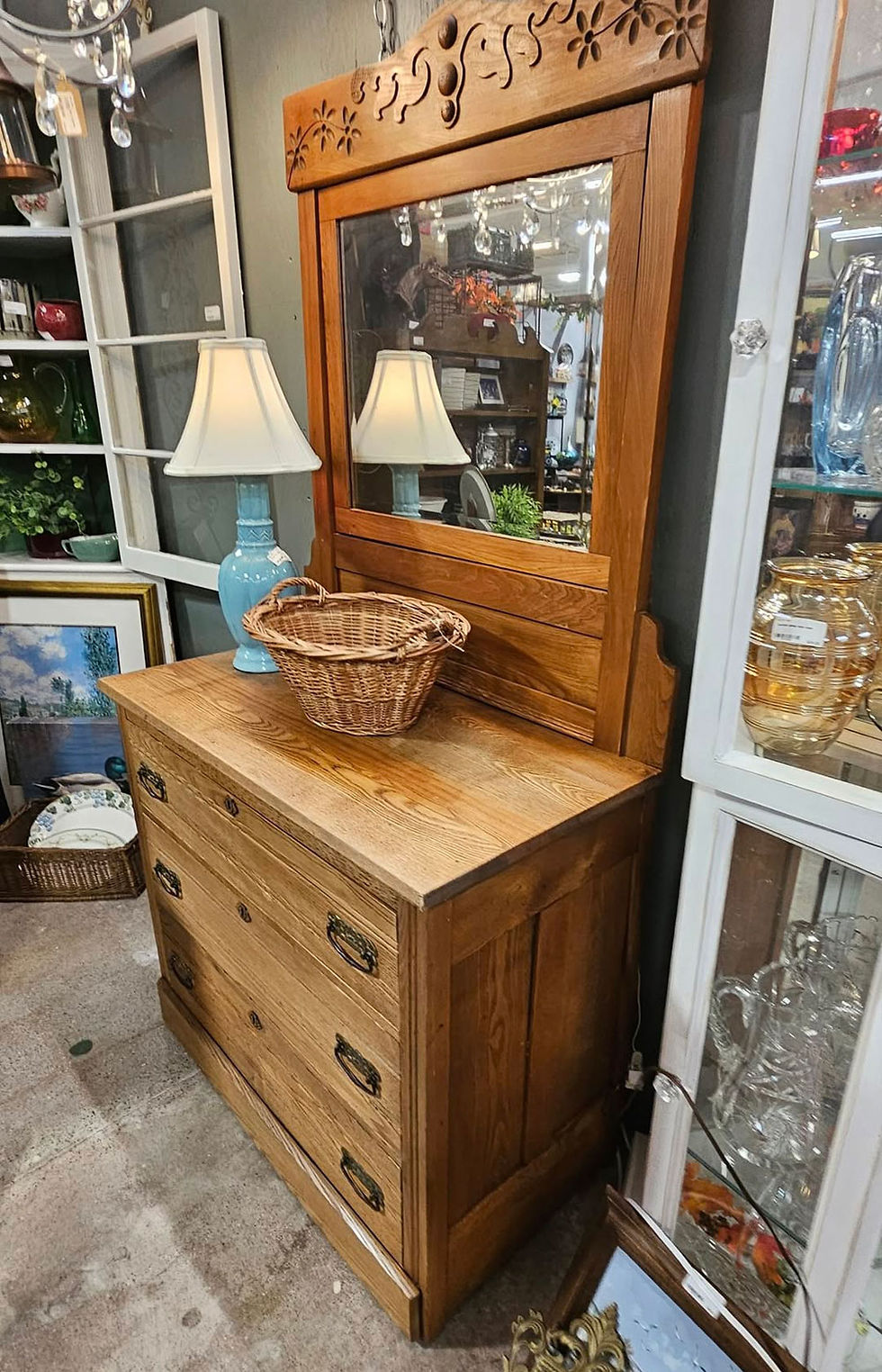
It doesn’t matter how much time passes—the chance of finding your dream antique furniture at the Algonquin vendor mall never wavers. The same is true for Victorian furniture styles! Keep an eye out for:
Chesterfield sofas
Four-poster beds
Carved dining tables
Ornate chest-of-drawers
Comfortable armchairs (spoon back, nursing, and balloon back styles)
If you’ve spent the last few years wondering if the antique furniture in your dining room is modern Victorian or truly aged, understanding the era’s design elements is crucial. If you spot any of the above details in your piece, you may have an authentic Victorian furniture style on your hands. Looking for a piece of your own? Stop by America’s Antique Mall today and search the aisles yourself!


